 Practice for Chapter 2
Homework
Points, lines and planes: two tasks for observing and conveying meaning.
First, find the points, lines and planes around you, then use them to convey a feeling or action. These two tasks link observation, composition, and purposeful revision.
How to complete tasks
For the first exercise you will need a smartphone camera, for the second - paper and a black marker, pen or ink. A digital tool available to you will also work. The second task is performed in black and white.
There is no mandatory "16 → 3 → 1" pattern from Chapter 1. In the first exercise, collect 15-20 examples and choose three. In the second, create three compositions, get feedback and rework one.
Keep the original images and explanations. They show not only the result, but also the progress of your decisions.
Task 1. Points, lines and planes in the environment
Find examples of points, lines, and planes in the environment. Look closely at the architecture or landscape. Your job is to see visual elements in the environment, take photos, and put together a presentation.
Learning objectives
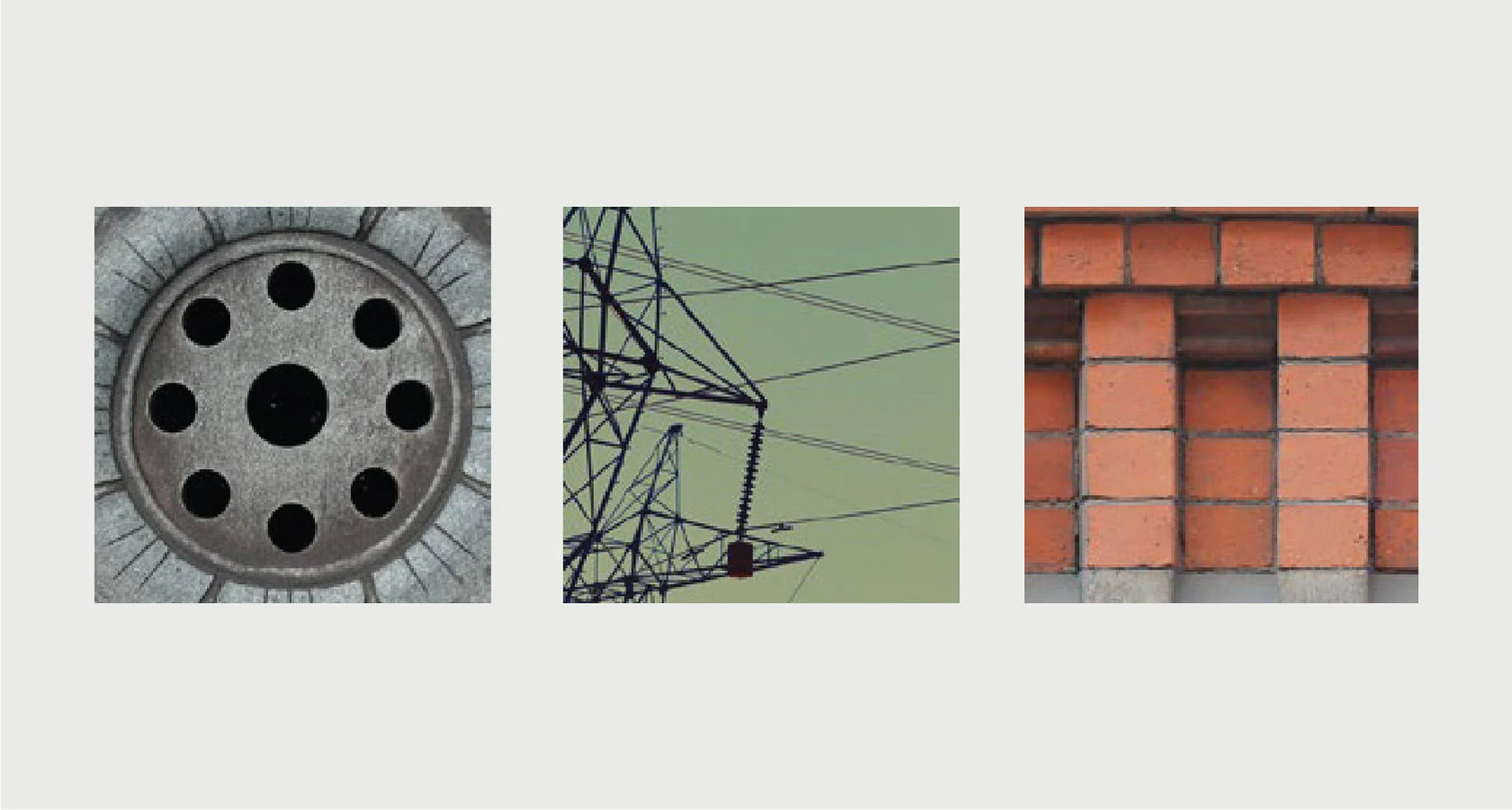
Points, lines and planes exist around us not only in art and design, but also in architecture and nature. In this activity, you will learn to look for clues and identify visual elements in your environment so you can better understand how to use them in your projects.
As a result of the task, you will find points, lines and planes in the environment and make a photo report.
Terms
Find and photograph 15–20 examples of points, lines, and planes in the environment. Then choose the three most compelling photos and explain your choice.
Create one three-page PDF document:
- The first page contains all 15–20 pictures.
- The second is the three best photos.
- The third is a short text about what elements are visible in the selected images and why you chose these scenes.
Provide a title for the assignment in the PDF file. Happy photo hunting!
Process
- Use your smartphone camera to complete the task.
- Study your environment (school, your home, city, workplace, etc.) and photograph unique examples with basic design elements (dots, lines, or planes).
- Review the footage and choose the three most convincing examples of the task. Justify your decision.
- Arrange the selected “strong” images on A4 sheet.
- Looking at the three completed images, write a brief argumentation for your decision. Describe why you think each of the selected images is successful and better than the others.
- Collect all the material into one PDF file.
Provide a title for the assignment in the PDF file. Good luck!
Task 2. Points, lines and planes in the intangible world
In the first task, you noticed visual elements around you. Now try to convey with their help something that cannot be photographed directly: an action, a feeling or a mood. Create a visual metaphor for each of the three chosen words.
Goals
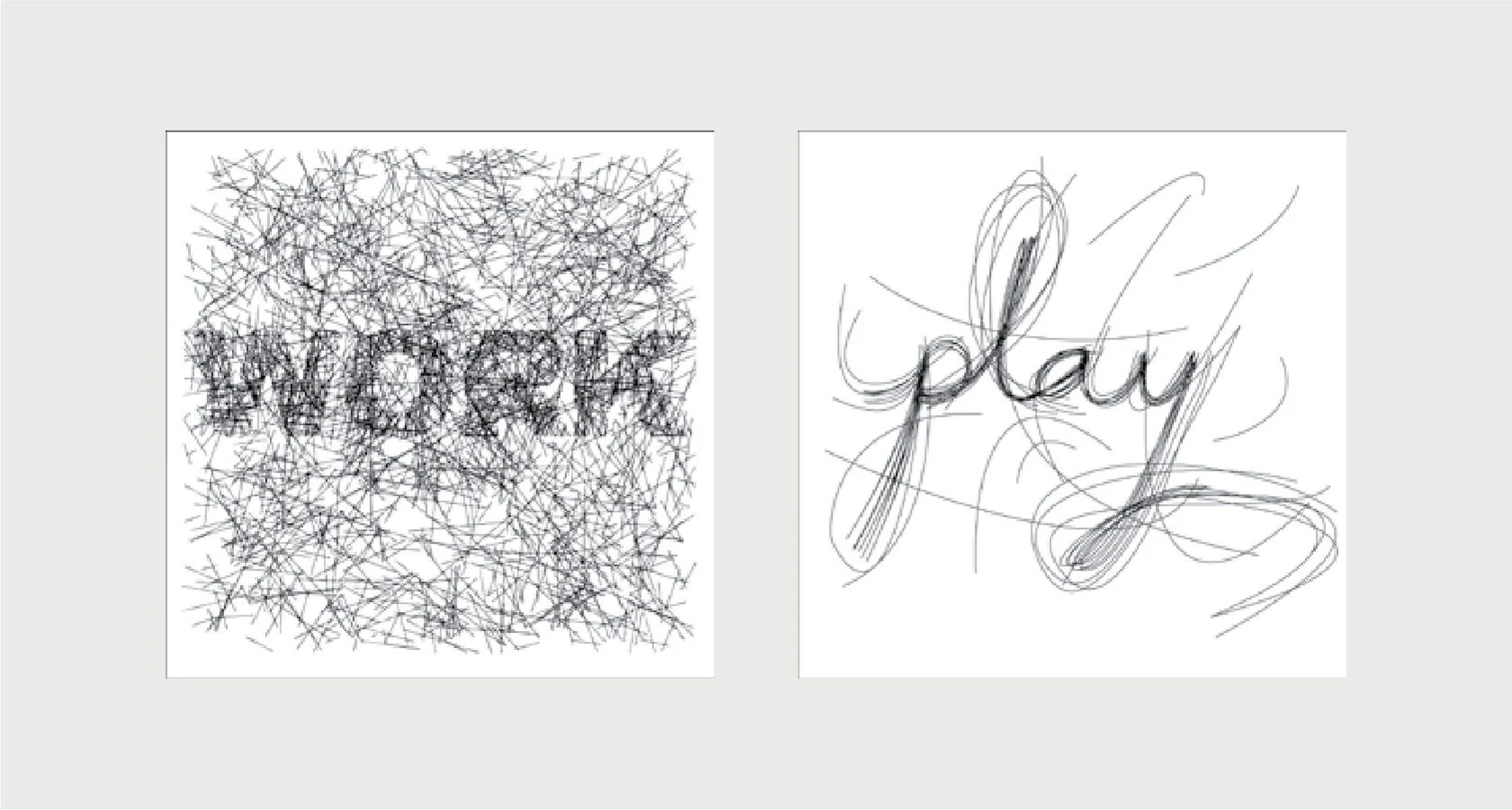
Despite their simplicity, points, lines and planes can be powerful and expressive tools for the artist and designer. What emotions do straight or curved lines convey? Will a group of dots be “more powerful” than a single dot? Which of the figures seems “dangerous” - a circle or a triangle? Simple variations in shape or direction of movement can create a strong emotional impact on the audience.
The result of the lesson will be the creation of several images. Use all three elements: convey one word with dots, another with lines, and the third with planes. For example, choose work, play, fear or hope. Use only one element for each word.
Terms
Prepare three black and white compositions for the three chosen words or emotions. In the first, use points, in the second, lines, in the third, planes. You decide which word each element corresponds to. Then revise one composition based on the feedback received from the discussion.
Compile one two-page PDF document. Place the three original compositions on the first one. The second contains an improved composition and a short explanation: what comments you received and what you changed. Provide a title for the assignment in the PDF file.
Process
- Make a short list of words that don't have an obvious visualization. Think about these words or emotions (work, play, fear, hope, etc.)
- Choose three words that represent actions or feelings. Subject words like “ball” or “ladder” are not suitable here. Express one word with dots, another with lines, and a third with planes.
- To create these images, you can use any suitable materials - pen and paper, ink and brushes. The focus should be on the design principles themselves (points, lines, and planes) and how students can use them to evoke a feeling or move them to action. Thus, the work must be in black and white.
- Show three compositions to another person or get comments from a AI tool or teacher. Ask to describe what creates a feeling of movement, calm or tension and what changes will help more accurately convey your intention.
- Choose one composition and rework it based on the comments received. Save the original version to show the changes.
- Write two or three short paragraphs: what words you chose, how the elements convey their meaning, what comments you received and what you changed.
- Build a PDF of two pages: three original compositions on the first; improved composition and explanation on the second. Enter the name of the task.
How work is checked
For each of the two tasks, up to 20 main and up to 5 bonus points are provided. PDF format and design bonus are the rules of this course.
In the second exercise, first get feedback on three original compositions, then add a revised version and an explanation of the changes. Keep the original version for comparison.
Next step - Chapter 3 about Gestalt and its practice exercises.